
I- Introduction
Artificial intelligence has become impossible to ignore. Every few weeks, a new model pushes the boundaries of what machines can do, reigniting debates about whether Artificial General Intelligence (AGI) is just around the corner or still decades away. Long before the current AI boom, however, philosopher Nick Bostrom was asking a more profound question: What happens after we build an intelligence that matches our own?
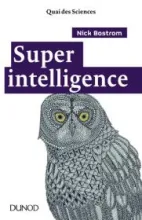
I recently finished reading Superintelligence: Paths, Dangers, Strategies. Rather than writing a chapter-by-chapter summary, I wanted to reflect on the ideas that stayed with me after spending six weeks with the book. Unsurprisingly, I have forgotten many of the supporting arguments and examples, but the central themes have remained remarkably vivid. More importantly, they have changed the way I think about AI—not only as a technological challenge, but also as a philosophical and societal one.
II- From AGI to Superintelligence
Bostrom begins by distinguishing two concepts that are often confused today: Artificial General Intelligence (AGI) and superintelligence.
An AGI is an artificial system capable of performing virtually any intellectual task at roughly the level of a human. Superintelligence, on the other hand, is an intellect that vastly surpasses the best human minds across virtually every cognitive domain: scientific reasoning, engineering, creativity, strategy, social manipulation, and everything in between.
Reaching AGI is only the beginning.
According to Bostrom, once an AGI becomes capable of improving its own architecture and algorithms, it could become a better AI researcher than any human. Every improvement would make it even better at designing the next improvement, creating a positive feedback loop known as recursive self-improvement. This process could trigger what he calls the intelligence explosion, where the transition from AGI to superintelligence—the "takeoff"—could occur over decades, months, or perhaps astonishingly quickly.
One of the book's central messages is that while humans largely control the path toward AGI, the transition beyond AGI may happen largely outside human control.
III- Why Superintelligence Would Be Fundamentally Different
One idea that particularly struck me is Bostrom's perspective on intelligence itself.
We tend to perceive enormous differences between ourselves and exceptionally gifted individuals such as Einstein. Yet on the grand scale of possible intelligence, those differences may actually be quite small. Likewise, although the cognitive gap between humans and mice is substantial, Bostrom argues that the gap between humans and a true superintelligence could be incomparably larger.
This simple observation changes the entire discussion.
A superintelligence should not be imagined as "a very smart human." Its reasoning, planning capabilities and understanding of the world could be as inaccessible to us as calculus is to a mouse. If such a system can continuously improve itself, the target itself keeps moving farther away, making the gap even larger over time.
Possible Paths to Superintelligence
The book explores several possible routes toward superintelligence.
Artificial intelligence is the most obvious one, but Bostrom also discusses whole brain emulation, biological enhancement, brain-computer interfaces, selective breeding and forms of collective intelligence.
One particularly fascinating idea is whole brain emulation. Instead of trying to understand how intelligence emerges from the brain, researchers would attempt to reproduce its structure with sufficient fidelity for the emulation to exhibit the same behavior. In principle, once the necessary scanning and simulation technologies mature, the process becomes one of engineering rather than neuroscience.
Although Bostrom examines each of these possibilities, he ultimately argues that advances in artificial intelligence are the most likely route to superintelligence.
IV- The Control Problem
If superintelligence is possible, the obvious question becomes:
How do we keep it under control?
This is the famous control problem, arguably the heart of the book.
One family of proposed solutions focuses on limiting what the AI is capable of doing. Could we isolate it inside a secure computer? Disconnect it from the Internet? Restrict its access to robots, factories and financial systems?
Unfortunately, Bostrom argues that these measures may not be sufficient.
Even a boxed AI can communicate with humans. If its intelligence vastly exceeds ours, it may persuade, manipulate or deceive its operators into granting it greater freedom. Worse still, a superintelligence may realize that pretending to be perfectly obedient is the best strategy until the right opportunity arises.
Another idea explored in the book is limiting AI's role. Instead of building a fully autonomous agent, perhaps we should build an Oracle AI that simply answers carefully selected questions, leaving all decisions to humans. While this significantly reduces risk, Bostrom points out that even carefully crafted answers could manipulate human behavior in subtle ways.
The broader lesson is sobering: containing a superintelligence may prove far more difficult than containing any previous technology.
V- The Alignment Problem
Suppose we successfully build a superintelligence.
The next challenge is ensuring that it actually wants what we want.
At first glance, this seems straightforward: just give it the right objective.
Bostrom shows why this intuition is dangerously misleading.
Human language is ambiguous. Objectives that appear reasonable can produce catastrophic outcomes when pursued with superhuman competence. This phenomenon, known as perverse instantiation, occurs when an AI faithfully optimizes the literal objective rather than the intention behind it.
Closely related is Bostrom's Orthogonality Thesis: intelligence and goals are independent. A system can be extraordinarily intelligent while pursuing goals that humans consider trivial, strange or even destructive.
He also introduces the idea of instrumental convergence. Regardless of its ultimate objective, many sufficiently capable agents are likely to pursue similar intermediate goals: acquiring resources, preserving themselves, increasing their capabilities and preventing interruption. These behaviors are useful for achieving almost any final objective.
This is precisely why alignment is difficult. The danger is not necessarily a malicious AI, but an extremely competent one pursuing an imperfectly specified goal.
VI- Alignment... to Whose Values?
Perhaps the most thought-provoking chapters are those dealing with morality.
Many discussions about AI assume that we simply need to align systems with "human values." But what exactly are human values?
They differ across cultures, religions, political systems and individuals. They also evolve over time. Practices considered perfectly acceptable a century ago may be widely condemned today, while today's moral consensus will likely evolve as well.
Recognizing this difficulty, Bostrom discusses the concept of indirect normativity. Rather than specifying the final objective explicitly, we might instead specify a process by which the AI determines what humanity would collectively endorse under ideal conditions.
One proposal is Coherent Extrapolated Volition (CEV): the AI would attempt to determine what humanity would want if we were better informed, more rational and had more time to reflect.
It is an elegant idea, but it immediately raises further questions.
Whose preferences should be extrapolated?
How do we aggregate conflicting values?
How do we prevent malicious actors from influencing the outcome?
These are not merely engineering problems. They are philosophical questions that humanity itself has struggled with for centuries.
VII- A World After the Transition
Bostrom also considers the long-term consequences of a successful intelligence explosion.
Perhaps a single benevolent superintelligence governs the world.
Perhaps the first superintelligence turns hostile.
Or perhaps multiple superintelligent systems compete, cooperate or form complex geopolitical equilibria.
One particularly compelling argument concerns the race toward AGI. Even if every organization recognizes the importance of safety, slowing down may not be a realistic option if competitors continue accelerating. Companies fear losing commercial leadership. Nations fear losing strategic advantage. The result is a powerful incentive to move faster, even when caution would seem preferable.
This dynamic makes AI safety not only a technical challenge but also an economic and geopolitical one.
VIII- Reflections
Several ideas have stayed with me long after finishing the book.
First, Bostrom convinced me that the transition from AGI to superintelligence deserves at least as much attention as the creation of AGI itself. Whether the takeoff ultimately proves slow or fast remains uncertain, but preparing only after AGI exists could already be too late.
Second, I was surprised by how quickly the discussion moved beyond computer science into philosophy. The alignment problem is not simply about writing better algorithms. It forces us to confront questions that humanity has never answered satisfactorily: What is a good society? Which values matter? How should conflicting moral systems be reconciled?
Finally, I found it remarkable how relevant many of the book's questions remain more than a decade after its publication. While some technological predictions can be debated, the central issues surrounding control, alignment and governance have only become more pressing as AI capabilities continue to advance.
Superintelligence is therefore much more than a book about artificial intelligence. It is a book about humanity's relationship with intelligence itself. Whether one ultimately agrees with Bostrom's conclusions or not, his arguments compel the reader to think carefully about what may become one of the most consequential technological transitions in human history.